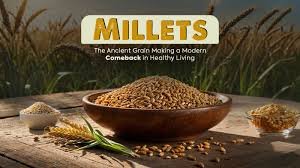
For thousands of years, millets were a staple in Indian households. From jowar rotis in Maharashtra to ragi mudde in Karnataka, these grains nourished generations. However, with the rise of polished rice and refined wheat, millets slowly disappeared from our plates. Today, they are making a powerful comeback—and for good reason.
Millets are naturally rich in fiber, protein, iron, calcium, and antioxidants. Unlike refined grains, they digest slowly, helping maintain steady blood sugar levels. This makes them an excellent choice for people managing diabetes and weight.
Beyond health, millets are environment-friendly crops. They require less water, grow well in dry regions, and need minimal chemical inputs. In a time of climate change, millets offer a sustainable solution for both farmers and consumers.
By choosing millets, we are not just improving our health but also supporting Indian farmers and preserving our food heritage. Adding millets to daily meals is a small step with a big impact.
In recent decades, changing food habits and the dominance of refined grains pushed millets out of regular consumption. However, the rise of lifestyle-related health issues such as diabetes, obesity, and digestive disorders has renewed interest in these nutrient-rich grains. Millets are high in dietary fiber, essential minerals, plant-based protein, and antioxidants, while being naturally gluten-free and low on the glycemic index—making them ideal for modern, health-conscious diets.
Beyond personal health, this blog also explores how millets support sustainable agriculture. These climate-resilient crops require less water, thrive in poor soil conditions, and reduce dependence on chemical fertilizers, making them beneficial for farmers and the environment. As global attention turns toward sustainable food systems, millets offer a powerful solution rooted in India’s agricultural heritage.
This blog highlights why returning to millets is not just a dietary choice, but a step toward better health, environmental balance, and preservation of India’s rich food culture.